
Home theatre blinds for a darker cinema room
Home theatre blinds should stop the daylight that washes out a projector image, reflects off a television and pulls your attention away from the screen. Coverlight DIY blackout blinds are made to your window measurements, with blockout fabric, a headbox, side channels and a bottom seal that deal with light around the edges as well as through the fabric.
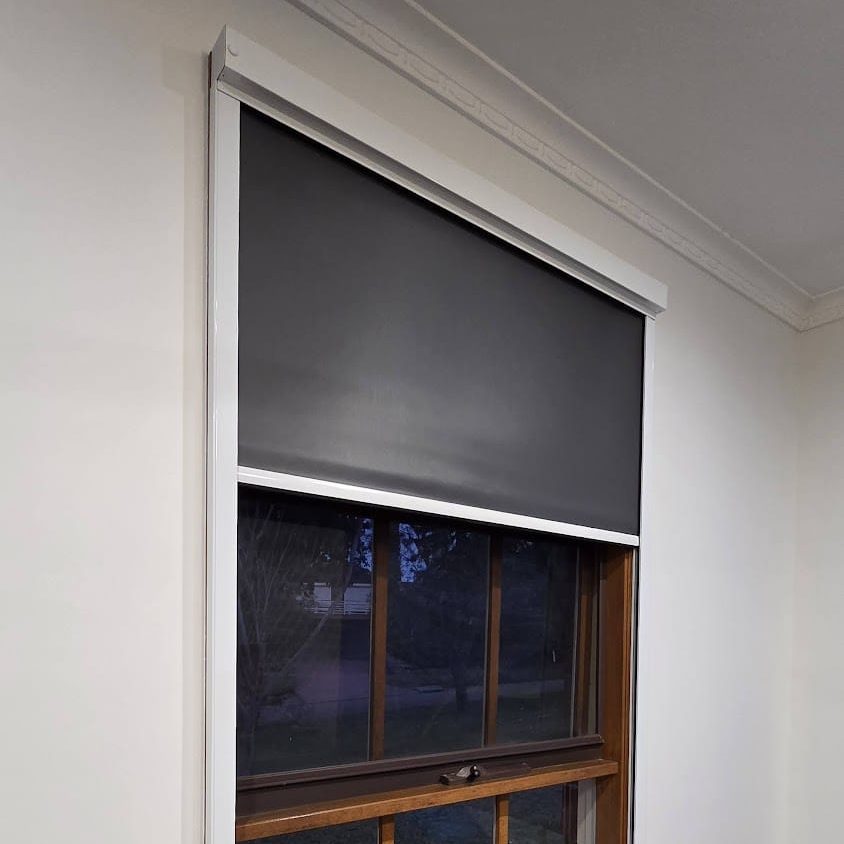
What are home theatre blinds?
Home theatre blinds are made-to-measure window coverings designed to create a dark viewing room by controlling light through the fabric and around its edges. A standard blockout roller can use opaque fabric but still leave bright gaps beside the blind, above the roller or near the sill. A theatre-ready blackout system addresses those gaps with a headbox, side channels and a bottom seal.
Coverlight DIY combines those parts in one framed blind made to the window measurements you provide. You can choose a manual, cord-free Soft-Touch Spring blind or a battery-powered motorised blind with remote control. A compatible Zigbee hub can add app, schedule and voice control through Google Home or Alexa. When the window is suitable and the blind is measured and installed correctly, the system is designed to create a true blockout result while still allowing you to reopen the blind for everyday daylight.
How does ambient light affect a projector image?
Ambient light can reduce the visible contrast of a projected image, particularly in dark scenes. Daylight from a window reaches the screen and lifts the darkest parts of the picture, so shadow detail and colour can appear flatter than they do in a controlled room. Glare and reflections can also distract from a television or gaming monitor.
Projector manufacturer BenQ explains that ambient light from windows and room lighting affects image brightness, contrast and colour accuracy, and recommends matching projector output to the light conditions in the room.
A retractable blackout blind gives you control over one of those conditions. You can use the space as a living room, gaming room or family room during the day, then close the window covering before watching. The blind controls window light; the projector, screen, wall finishes and room lighting still influence the final picture.
Why ordinary blockout blinds can leave a bright edge
Blockout fabric stops light passing through the material. That is only one part of a dark room.
A standard roller blind is usually open at the top and sides. Even when the fabric is fully opaque, light can travel around those gaps and create a bright line beside the blind. Curtains can reduce the light, but folds, rails and the space between the curtain and wall may leave similar gaps.
Coverlight DIY uses a headbox, side channels and a bottom seal around the blind. Each blind is made to the window measurements you provide. When the window is suitable and the blind is measured and installed correctly, these parts work together to create a true blockout result.
Built around your window
The fit matters as much as the fabric. Coverlight DIY blinds are made to measure rather than cut from a standard size, so the finished frame matches the opening you measured.
Before ordering, check the window recess, handles, winders, latches and other obstructions. An inside mount can give the room a neat, built-in finish when there is enough clear recess depth. An outside mount covers the window opening and can be the better choice where the recess is shallow or obstructed.
Follow the DIY measuring guide for the current clearance requirements and the exact measurements to enter. Measure every window separately, even when two openings appear identical.
Choose manual or motorised home theatre blinds
Both control options use the same made-to-measure approach. The right choice depends on the window, the way you use the room and how much automation you want.
Manual blinds
The manual blind uses a light-touch, cord-free Soft-Touch Spring system with no operating chain. A practical choice for a smaller home theatre, a single accessible window, or a room where you prefer straightforward control without a remote or app.
Up to 3000mm wide × 3000mm dropMotorised blinds
Lower or raise the blind from your seat. The battery-powered system is wire-free — no electrician or new wiring. Use a remote, or add a compatible Zigbee hub for app, schedule and voice control through Google Home or Alexa. A movie routine can close the blinds before the projector starts.
Up to 4000mm wide × 3000mm dropSubject to the minimum sizes and window conditions in the configurator. Compare the options on the motorised blinds page and read about smart blind automation.
A practical DIY fit for new and existing rooms
You can plan a Coverlight DIY blind while building a dedicated cinema room or add one to a room you already use. The system is designed for DIY installation with basic tools, and the measuring and installation guides explain the process before you order.
Measure
Check the mounting surface, recess depth and obstructions. Record the required measurements in millimetres.
Order
Choose the fabric, frame and control type that suit the window and room.
Install
Follow the installation guide and keep the motor charging port accessible.
More control over comfort as well as light
A sealed blackout blind adds another barrier between the room and the window. Coverlight DIY’s foam-backed blockout fabric and enclosed edges are designed to improve insulation, which can make a theatre room more comfortable through warm afternoons and cold evenings.
This is a supporting benefit rather than a substitute for suitable glazing, draught sealing or heating and cooling. The main job of the blind is still light control.
The blind may also soften some outside noise, but it is not an acoustic treatment or a soundproofing product. Plan wall, ceiling and speaker treatments separately if sound control is part of the room build.
Why choose Coverlight DIY
- Made in Australia: designed and manufactured in Melbourne.
- Made to measure: each blind is built from the window measurements you enter.
- Edge-to-edge light control: blockout fabric works with a headbox, side channels and a bottom seal.
- Manual or motorised: choose Soft-Touch Spring operation, remote control or compatible smart-home automation.
- DIY installation: measure, order and fit the blind yourself using Coverlight DIY’s guides.
- Five-year warranty: covered by the current five-year warranty terms.
Home theatre blinds FAQs
Are blackout blinds good for a home theatre?
What is the difference between blockout fabric and a true blackout blind?
Should I choose a manual or motorised blind for a media room?
Can I connect motorised blinds to my smart home?
Can I install home theatre blinds myself?
Will blackout blinds soundproof my theatre room?
Can I use these blinds in a room with a television or gaming setup?
Start with the window
Check the mount, measure it carefully and choose the control type that suits the way you use the room.
Call 1800 482 777 if you need help checking an unusual window before ordering.